A place to start
Choose a setting around assessed needs. A service name, building size or bedroom photograph does not explain the full level of support available.
Care terms can sound interchangeable when you first start searching. They point to different questions about everyday help, cognitive support and medical care. Understanding those questions makes a shortlist much more useful.
Assisted living: ask about daily support.
Texas Health and Human Services describes assisted living as personal and health-related assistance in a residential setting. A facility can be a private home or a larger building. Ask which tasks the team can help with, who provides that help and how needs are assessed.
Rather than asking only, “Do you offer assisted living?”, describe an ordinary morning and evening. Ask what the home would do in each situation and what would need to be arranged separately. Get the agreed scope in writing before admission.
Memory care: ask what is actually provided.
Memory care addresses support for people living with dementia, but the label alone does not tell you a provider’s staffing, environment or capabilities. The Alzheimer’s Association notes that not every assisted living provider offers dementia-specific services. Ask about the person’s needs individually.
Bring questions about communication, routines, supervision and what happens if needs change. Ask the team to explain the limits of its service as clearly as its strengths. Do not assume a memory-care label means a locked unit, continuous nursing or suitability for every stage of illness.
Nursing care: clarify the clinical requirements.
The National Institute on Aging distinguishes nursing homes by their greater focus on medical and nursing services. If a hospital or clinician recommends rehabilitation or skilled nursing, ask them to specify what is needed. An assisted living room is not automatically an alternative to that recommendation.
| Question | What to clarify |
|---|---|
| Daily help | The tasks, timing and people responsible. |
| Cognitive support | The individual’s supervision and communication needs. |
| Clinical services | Which services require licensed professionals and where they will be provided. |
How Optimal fits into the conversation.
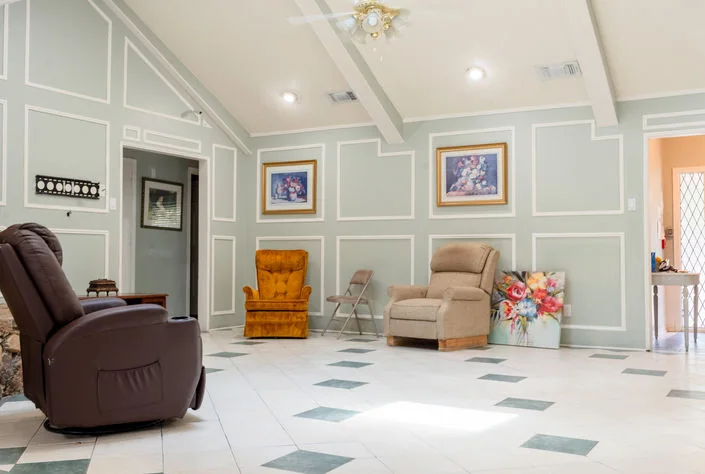
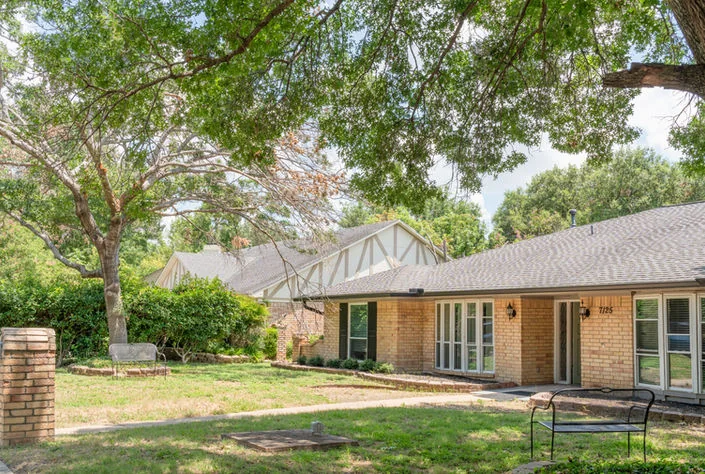
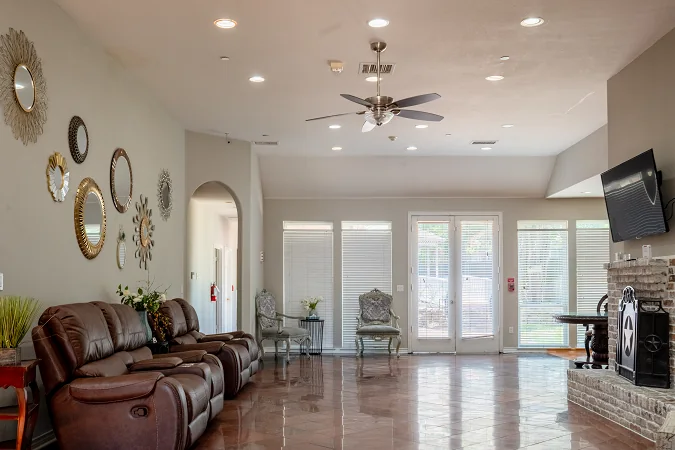
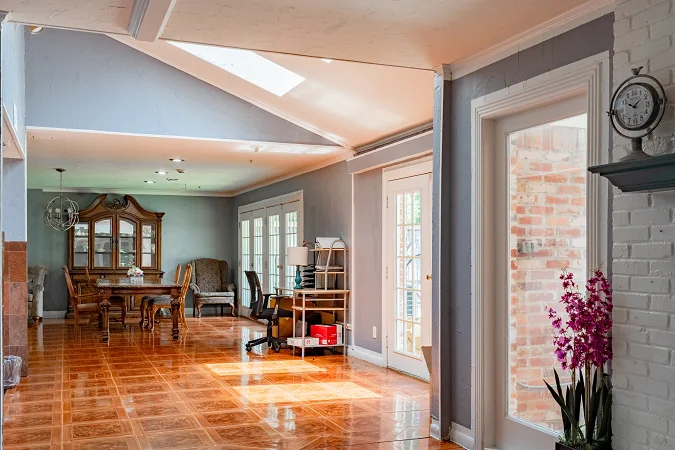
Optimal Cares at Home offers assisted living and memory care at Royal Lane, Lavendale Circle and Merriman Parkway. Each home has capacity for eight residents. Caregiver coverage is two caregivers from 7 a.m. to 7 p.m. and one overnight. Those numbers describe caregiver coverage, not round-the-clock nursing.
We begin with a tour and a conversation about fit. Before making a decision, ask the prospective provider and your loved one’s clinician to address any clinical requirements that remain unclear. Compare settings only after you understand whether they can meet the same needs.
Plan the next conversation.
This guide offers general planning information, not a clinical assessment. Discuss individual symptoms and care needs with a qualified health professional.
Sources & further reading
Care, insurance or regulatory references used in this guide. Consult the source for its full guidance.
- National Institute on Aging: Types of residential long-term care
- Alzheimer’s Association: Residential long-term care
- Texas Health and Human Services: Assisted living facilities
Sources checked November 17, 2026.
About our sources and editorial standards
Questions about our Dallas homes? Call 415-359-7998 or arrange a tour. Please keep medical records and sensitive health details out of the website form.